Worried About Elderly Parent Living Alone in Washington? What Families Should Know


Staying independent doesn’t mean going unnoticed.
Our weekly check-ins are designed to help families stay informed and older adults stay independent at home. Get started in under 24 hours.
If you’re worried about your elderly parent living alone in Washington, you’re far from alone. Thousands of families across the state are balancing careers, children, and daily responsibilities while quietly wondering whether their aging parent is truly safe at home. Maybe you’ve noticed missed medications, forgetfulness, unopened mail, spoiled food, increasing isolation, or changes in mobility. Maybe every unanswered phone call creates anxiety.
For families in Seattle neighborhoods like Ballard, Bellevue, and Kirkland — especially near landmarks like Pike Place Market or the Space Needle — these concerns are becoming increasingly common as parents age independently longer than previous generations. The difficult reality is that many seniors appear “mostly fine” until a fall, hospitalization, or cognitive issue suddenly changes everything.
The good news is that support doesn’t have to mean losing independence. With proactive oversight and the right in-home support, many seniors can remain safe, comfortable, and independent at home much longer.
Why Families Worry About Elderly Parents Living Alone
Most seniors want to age in place. They want the comfort of their own routines, homes, communities, and memories.
But aging introduces risks that become harder for families to ignore over time.
Common concerns include:
Falls
Memory decline
Medication mistakes
Isolation
Driving safety
Poor nutrition
Wandering or confusion
Difficulty managing finances
Missed doctor appointments
Emergency situations without help nearby
Adult children often find themselves in a constant state of low-level anxiety:
“Did they remember their medication today?”
“What if they fall and nobody knows?”
“Are they eating enough?”
“Are they becoming lonely or depressed?”
These worries are not irrational. They are usually early signs that additional support may help preserve safety and quality of life.
Signs an Elderly Parent May No Longer Be Safe Living Alone
One of the hardest parts of aging is that decline often happens gradually.
Families may normalize small changes until a serious incident forces action.
Physical Warning Signs
Pay attention to:
Bruises or unexplained injuries
Trouble walking or standing
Weight loss
Difficulty climbing stairs
Poor hygiene
Laundry piling up
Expired food in the refrigerator
Increased fatigue
Physical decline often begins subtly months before a major fall or hospitalization.
Cognitive Warning Signs
Memory-related changes may include:
Repeating stories
Forgetting appointments
Missing medications
Leaving appliances on
Confusion with finances
Getting lost driving
Difficulty following conversations
These signs do not always mean dementia, but they should not be ignored.
Emotional & Social Warning Signs
Isolation is one of the biggest hidden threats to senior health.
Watch for:
Withdrawal from hobbies
Avoiding social interaction
Sleeping excessively
Depression
Increased anxiety
Lack of motivation
Fearfulness
Loneliness has been linked to worsening physical health, faster cognitive decline, and higher hospitalization rates.
The Biggest Risks of Seniors Living Alone
Risk | Why It Matters |
|---|---|
Falls | One of the leading causes of hospitalization among seniors |
Medication Errors | Missing or doubling medication can quickly become dangerous |
Isolation | Loneliness impacts both mental and physical health |
Malnutrition | Seniors may stop cooking or forget to eat |
Cognitive Decline | Lack of oversight can delay identifying memory issues |
Delayed Emergency Response | Minor incidents can escalate without quick help |
Many families wait until a crisis happens before seeking support.
Unfortunately, reactive care is often:
More expensive
More emotionally draining
More disruptive to independence
When Should Families Step In?
This is one of the hardest questions adult children face.
Most families struggle because:
Their parent insists they’re fine
They fear taking away independence
They want to respect autonomy
They hope problems improve on their own
But waiting for certainty often means waiting for a crisis.
Families typically act after:
A serious fall
Hospitalization
Medication complications
Wandering
Severe confusion
Car accidents
Unsafe living conditions
The earlier support begins, the more options families usually have.
How to Talk to an Aging Parent About Living Alone
Approach matters.
Many seniors resist conversations that feel controlling or threatening.
Avoid:
“You can’t live alone anymore.”
“You’re not safe.”
“You need care.”
Instead focus on:
Maintaining independence
Making life easier
Increasing peace of mind
Preventing emergencies
Helpful conversation starters:
“Would extra support make things easier?”
“How are groceries and errands feeling lately?”
“What would happen if you fell?”
“Would weekly check-ins help you feel safer?”
Seniors are far more receptive when they feel included in decisions rather than managed.
Care Options for Elderly Parents Living Alone
Many people think the only options are:
Assisted living
Nursing homes
Full-time caregivers
That’s not true.
There are many levels of support depending on need.
Support Option | Best For |
Family Check-Ins | Minimal concerns |
Wellness Visits | Early oversight and monitoring |
Companion Care | Isolation and light assistance |
Personal Care | Bathing, dressing, mobility help |
Dementia Support | Cognitive decline and confusion |
Respite Care | Supporting family caregivers |
24-Hour Care | Advanced safety concerns |
The right support depends on current risks, not simply age.
Why Proactive Aging Support Matters
One of the biggest misconceptions families have is that delaying help saves money.
In reality, unmanaged aging challenges often lead to:
Emergency room visits
Hospital stays
Rehabilitation
Earlier assisted living placement
Faster cognitive decline
Caregiver burnout
Preventative support often costs significantly less than crisis-driven care.
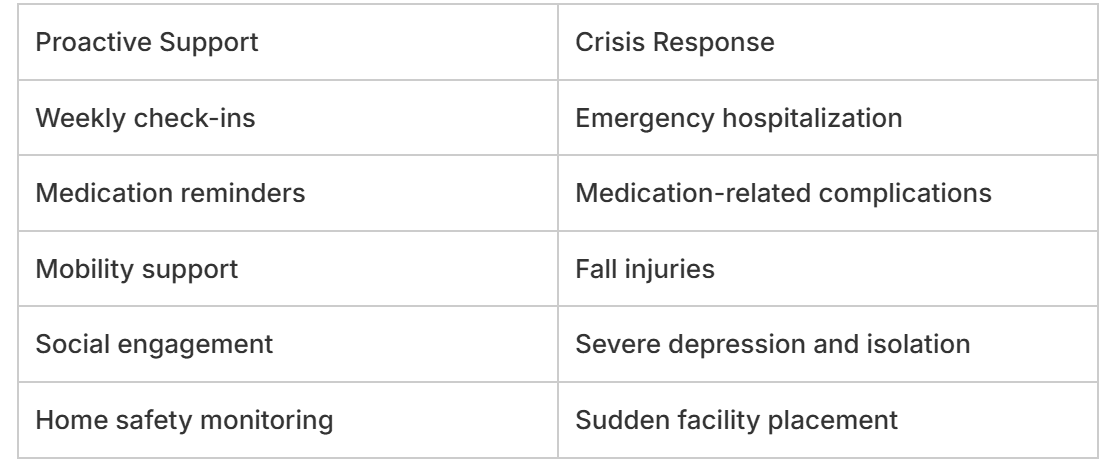
The goal is not dependency. The goal is sustainable independence.
How Caringene Helps Families Across Washington
At Caringene, we understand that many families are not looking for full-time care immediately.
They simply want:
Peace of mind
Extra oversight
Consistent communication
Early identification of problems
Help keeping parents independent safely
Our approach focuses on proactive aging support that helps seniors stay in their homes longer while reducing long-term stress and healthcare costs.
Why Localized Care Makes a Difference
Washington families benefit from caregivers who understand:
Local healthcare systems
Community resources
Neighborhood accessibility
Traffic and transportation challenges
Local senior support networks
Whether your parent lives in Seattle, Bellevue, Kirkland, or surrounding Eastside communities, localized support creates more responsive and personalized care.
That consistency matters deeply for aging adults.
Washington Resources for Seniors & Families
Washington State Department of Social and Health Services (DSHS)
Provides senior programs, caregiver support resources, and long-term care information.
Area Agencies on Aging
Connects seniors and caregivers to local support services across Washington.
EvergreenHealth
Major healthcare system serving seniors across the Eastside.
Sound Generations
Offers transportation, meals, caregiver support, and senior programs throughout King County.
Frequently Asked Questions
How do I know if my elderly parent is no longer safe living alone?
Common warning signs include falls, memory issues, isolation, poor hygiene, missed medications, weight loss, confusion, and difficulty managing daily activities.
Is it better to start support early?
Yes. Early intervention often helps seniors remain independent longer while preventing emergencies, hospitalizations, and rapid decline.
Does in-home support mean losing independence?
No. In many cases, proactive support actually helps seniors maintain independence by addressing problems before they become severe.
Helping Parents Stay Independent — Safely
Most seniors want to remain in the homes and communities they love. Most adult children simply want reassurance that their parent is safe, supported, and not struggling alone.
The best outcomes usually happen before a crisis forces difficult decisions.
If you’re worried about your elderly parent living alone in Washington, Caringene can help you build a proactive support plan that protects independence while giving your family peace of mind.
Our goal is simple:
Help seniors stay safer at home
Reduce family stress
Catch problems early
Lower long-term aging costs
Preserve dignity and independence for as long as possible
Sometimes the right support is not about taking freedom away — it’s about helping protect it.
Explore More Helpful Guides on the Caringene Blog:
The content on this blog is intended for general informational purposes only and does not constitute medical advice, diagnosis, or treatment. Caringene is a non-medical home care provider. Do not make healthcare decisions based on the information provided here—always consult with a physician or licensed medical professional for guidance regarding medical care or treatment.