Signs Elderly Parent Is Declining in Kirkland: 12 Warning Signs Families Often Miss


Staying independent doesn’t mean going unnoticed.
Our weekly check-ins are designed to help families stay informed and older adults stay independent at home. Get started in under 24 hours.
Signs Elderly Parent Is Declining in Kirkland: 12 Warning Signs Families Often Miss
If you’re starting to wonder whether your parent is declining, you’re not alone. For many families in Kirkland, the hardest part isn’t knowing what to do — it’s knowing when something has actually changed.
Most decline in older adults happens gradually. A missed medication here. Weight loss there. Forgotten appointments. Less interest in going out. These changes often appear slowly enough that adult children explain them away as “normal aging” until a crisis happens.
Whether your parent lives independently near Juanita, Totem Lake, or Houghton, recognizing the early warning signs of decline can help prevent hospitalizations, preserve independence, and reduce long-term aging costs. Families who catch these changes early typically have more options, less stress, and better outcomes than those forced into reactive decisions after an emergency.
The good news? Decline almost always leaves clues first.
What Does It Mean When an Elderly Parent Is Declining?
Decline doesn’t necessarily mean your parent immediately needs assisted living or full-time care. In many cases, it simply means they’re beginning to struggle with certain aspects of daily life.
This can include:
Physical decline
Cognitive changes
Emotional withdrawal
Reduced mobility
Difficulty managing routines
Safety concerns at home
The challenge for families is that many of these changes are subtle at first — especially if you don’t see your parent every day.
12 Signs an Elderly Parent Is Declining
1. Noticeable Memory Problems
Forgetfulness becomes concerning when it disrupts daily functioning.
You may notice:
Repeating questions frequently
Missing appointments
Forgetting medications
Confusion with dates or routines
Difficulty following conversations
If your parent gets confused driving around familiar Kirkland areas like Downtown Kirkland or near Kirkland Urban, it may indicate cognitive decline rather than simple aging.
2. Poor Hygiene or Unkempt Appearance
A decline in personal hygiene is one of the most common early warning signs families overlook.
Look for:
Wearing the same clothes repeatedly
Body odor
Unwashed hair
Neglected grooming
Dirty living spaces
This may signal depression, mobility limitations, cognitive impairment, or exhaustion.
3. Weight Loss or Poor Eating Habits
Unexpected weight loss in seniors is rarely something to ignore.
Common causes include:
Forgetting to eat
Difficulty cooking
Medication side effects
Depression
Trouble grocery shopping
Adult children often discover:
Expired food
Empty refrigerators
Burned cookware
Spoiled groceries
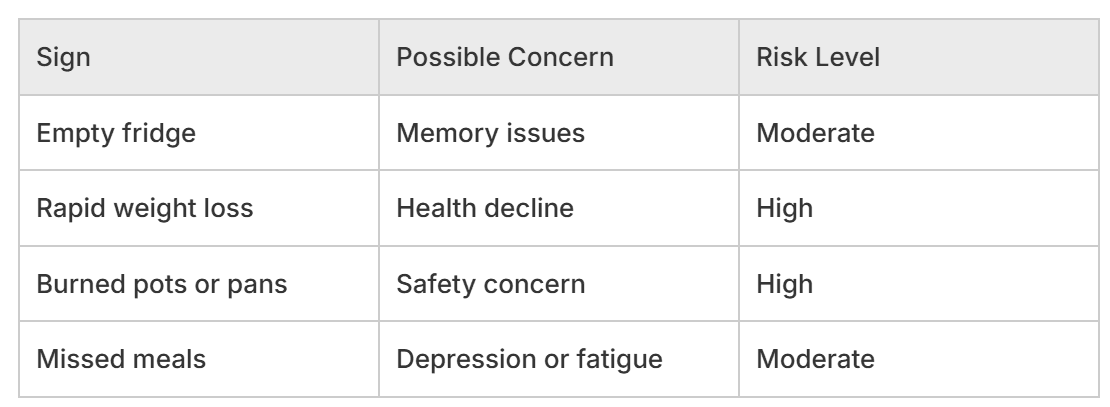
Physical Signs of Decline in Older Adults
4. Increased Falls or Mobility Issues
Falls are one of the biggest indicators that an older adult may no longer be safely aging alone.
Warning signs include:
Bruises
Trouble getting out of chairs
Holding onto walls or furniture
Slower walking speed
Fear of stairs
For seniors living in hilly areas around Houghton or near waterfront walking paths at Marina Park, reduced balance can quickly become dangerous.
5. Fatigue and Reduced Energy
If your parent suddenly seems tired all the time, pay attention.
This can show up as:
Excessive sleeping
Lack of motivation
Avoiding activities
Spending entire days sitting indoors
Fatigue may point to chronic illness, depression, medication issues, or nutritional deficiencies.
6. Trouble Managing Medications
Medication confusion is extremely common in aging adults.
Signs include:
Missed doses
Double dosing
Unopened prescriptions
Pills scattered around the house
Confusion about medication schedules
This is often one of the earliest signs that independent living is becoming harder to manage safely.
Emotional and Behavioral Changes Families Miss
7. Increased Isolation
Isolation accelerates decline dramatically.
You may notice your parent:
Stops answering calls
Declines invitations
Avoids social events
Rarely leaves the house
Withdraws from hobbies
Many seniors in Kirkland neighborhoods like Juanita quietly become isolated long before family members realize how disconnected they’ve become.
8. Personality Changes
Subtle personality shifts often appear before major cognitive symptoms.
Examples include:
Increased irritability
Anxiety
Suspicion
Mood swings
Emotional outbursts
Families often dismiss these changes as stress or aging when they may indicate neurological or emotional decline.
9. Lack of Interest in Daily Responsibilities
A declining parent may stop keeping up with:
Laundry
Bills
Mail
Home cleaning
Yard maintenance
Stacks of unopened mail or unpaid bills are major warning signs that executive functioning may be declining.
Signs an Elderly Parent May No Longer Be Safe Living Alone
10. Unsafe Driving
Driving issues are often one of the clearest indicators of decline.
Watch for:
New dents or scratches on the car
Traffic tickets
Getting lost
Delayed reaction times
Fear of driving at night
Difficulty navigating familiar Kirkland routes may signal worsening cognitive or physical limitations.
11. Frequent Hospital Visits or Medical Emergencies
Repeated ER visits often point to a larger underlying decline pattern.
Common reasons include:
Falls
Dehydration
Medication mistakes
Infections
Confusion episodes
Families who intervene earlier often reduce the likelihood of repeated emergencies.
12. “Something Just Feels Off”
Many adult children sense subtle changes before they can clearly explain them.
Trust your instincts if:
Conversations feel different
Your parent seems less sharp
Their home feels neglected
Their energy has changed
They seem withdrawn or overwhelmed
Families often regret ignoring these instincts later.
Why Families Miss the Early Signs of Decline
One of the biggest misconceptions about aging is that decline happens suddenly.
In reality, it usually happens gradually over months or years.
Why it’s easy to miss:
Seniors often hide struggles
Parents don’t want to worry their children
Phone calls can mask problems
Adult children see only “good days”
Long-distance families lack visibility
This is especially common for busy professionals balancing careers and caregiving from a distance.
The Cost of Waiting Too Long
When decline goes unnoticed, families often end up making decisions during a crisis.
That can lead to:
Emergency hospitalizations
Expensive assisted living transitions
Caregiver burnout
Loss of independence
Higher long-term healthcare costs
Reactive vs. Proactive Aging Support
Reactive Approach | Proactive Approach |
|---|---|
Wait for emergencies | Identify issues early |
Crisis-driven decisions | Gradual planning |
Higher medical costs | Lower long-term costs |
Faster loss of independence | Longer independent living |
Family stress and burnout | More peace of mind |
What Families in Kirkland Can Do Next
Start Observing More Closely
Pay attention during visits:
Is food stocked?
Is the home clean?
Are medications organized?
Has appearance changed?
Are they socially active?
Small observations often reveal larger trends.
Have Honest Conversations Early
Instead of:
“You can’t live alone anymore.”
Try:
“I want to make sure you’re safe and supported.”
Approaching the conversation collaboratively reduces resistance and defensiveness.
Don’t Wait Until Full-Time Care Is Needed
Many families assume the only options are:
Do nothing
Move to assisted living
Hire full-time home care
But there’s a large gap between complete independence and full-time caregiving.
That’s where consistent visibility and early intervention matter most.
Local Kirkland Resources for Aging Adults
Families in Kirkland can explore several local senior support resources:
EvergreenHealth Senior Care
City of Kirkland Senior Programs
Eastside Friends of Seniors
Hopelink Transportation Services
Northshore Senior Center
Community areas like Marina Park and Kirkland Urban also host wellness activities and social opportunities that help older adults stay engaged and connected.
Why Families Are Choosing Caringene
Many older adults don’t need daily caregiving support yet. What families often need first is visibility.
Caringene helps families stay informed about how their aging parent is really doing through regular in-person wellness visits and proactive check-ins.
Instead of waiting for a fall, hospitalization, or emergency, Caringene helps identify subtle changes early — before small concerns become major crises.
Caringene Helps Families:
Monitor gradual changes over time
Catch warning signs early
Reduce unnecessary emergencies
Keep parents independent longer
Stay informed from a distance
Reduce long-term aging costs
Traditional Approach vs. Caringene
Traditional Aging Support | Caringene Approach |
|---|---|
React after a crisis | Identify issues early |
Limited family visibility | Consistent in-person check-ins |
Depend on occasional calls | Regular wellness observations |
Emergency-driven decisions | Proactive planning |
Faster transition to costly care | Longer independence at home |
For many families in Kirkland, the goal isn’t simply adding years — it’s protecting quality of life, independence, and dignity for as long as possible.
Frequently Asked Questions
What are the earliest signs an elderly parent is declining?
Early signs often include forgetfulness, poor hygiene, isolation, fatigue, weight loss, medication confusion, and changes in behavior or personality.
How can I tell if my elderly parent is unsafe living alone?
Warning signs include frequent falls, missed medications, unsafe driving, poor home conditions, repeated hospital visits, and difficulty managing daily tasks.
What should I do if I think my parent is declining?
Start by observing patterns, having supportive conversations, and seeking consistent visibility into their day-to-day wellbeing before a crisis occurs.
Stay Ahead of Problems Before They Become Emergencies
Most serious aging challenges don’t appear overnight. They build slowly through subtle changes families may not notice until something goes wrong.
Caringene helps Kirkland families stay connected to their aging parents through consistent in-person wellness visits designed to catch changes early and support long-term independence.
If you’re worried your parent may be declining but aren’t sure what level of support they need yet, Caringene can help you gain clarity, visibility, and peace of mind — before a crisis forces difficult decisions.
Explore More Helpful Guides on the Caringene Blog:
Signs Elderly Parent Is Declining in Kent: 12 Warning Signs Families Often Miss
Signs Elderly Parent Is Declining in Renton: 12 Warning Signs Families Often Miss
Signs Elderly Parent Is Declining in Seattle: Warning Signs Families Should Never Ignore
Signs Elderly Parent Is Declining in Redmond: Warning Signs Families Should Never Ignore
The content on this blog is intended for general informational purposes only and does not constitute medical advice, diagnosis, or treatment. Caringene is a non-medical home care provider. Do not make healthcare decisions based on the information provided here—always consult with a physician or licensed medical professional for guidance regarding medical care or treatment.