Worried About Elderly Parent Living Alone in Renton? Signs, Solutions & Local Support


Staying independent doesn’t mean going unnoticed.
Our weekly check-ins are designed to help families stay informed and older adults stay independent at home. Get started in under 24 hours.
If you’re worried about your elderly parent living alone in Renton, you’re not overreacting. Many adult children notice subtle warning signs long before a true emergency happens. Missed medications, isolation, falls, confusion, spoiled food, or difficulty keeping up with daily routines can all signal that your loved one may need more support than they’re getting right now.
Families across Renton neighborhoods like Fairwood, Kennydale, and Highlands often face the same difficult question: “Are they still safe living independently?” The challenge is that most seniors want to maintain their freedom, even when daily life becomes harder to manage. Whether your parent lives near Gene Coulon Memorial Beach Park or close to The Landing, knowing what signs to look for — and what options exist — can help you take action before a crisis happens.
At Caringene, we work with families who want to help aging parents stay independent safely while reducing long-term stress and care costs.
Why Families in Renton Worry About Elderly Parents Living Alone
Living alone can work well for many seniors. But aging changes happen gradually, which makes them easy to miss until something serious occurs.
Some of the most common concerns families notice include:
Increased forgetfulness
Missed appointments
Poor hygiene or housekeeping
Weight loss
Loneliness or depression
Trouble driving
Falls or mobility issues
Medication mistakes
Difficulty managing bills
Reduced social activity
In Renton, many seniors live independently in longtime family homes. Adult children may live in Seattle, Bellevue, or out of state, making it difficult to check in consistently.
That uncertainty creates constant anxiety:
“Did they take their medication?”
“What if they fall?”
“Are they eating properly?”
“Would anyone know if something happened?”
Those worries usually don’t disappear on their own.
Signs Your Elderly Parent May No Longer Be Safe Living Alone
Not every senior needs full-time care. But there are usually early warning signs that indicate additional support could help.
Physical Warning Signs
Watch for:
Unexplained bruises
Difficulty walking
Weight loss
Dirty clothing
Spoiled food in the refrigerator
Missed medications
Trouble getting out of chairs or bed
Small physical changes often appear months before a major health event.
Cognitive Changes
Memory issues can show up subtly at first.
Examples include:
Repeating stories frequently
Forgetting appointments
Confusion with finances
Leaving the stove on
Getting lost driving familiar routes
Difficulty following conversations
Families in neighborhoods like Fairwood and Kennydale often notice these changes during weekend visits or holiday gatherings.
Emotional & Social Changes
Isolation is one of the biggest hidden risks for seniors living alone.
Look for:
Withdrawal from hobbies
Avoiding phone calls
Sleeping excessively
Signs of depression
Increased anxiety
Lack of motivation
Loneliness can accelerate both physical and cognitive decline.
Common Risks of Elderly Parents Living Alone
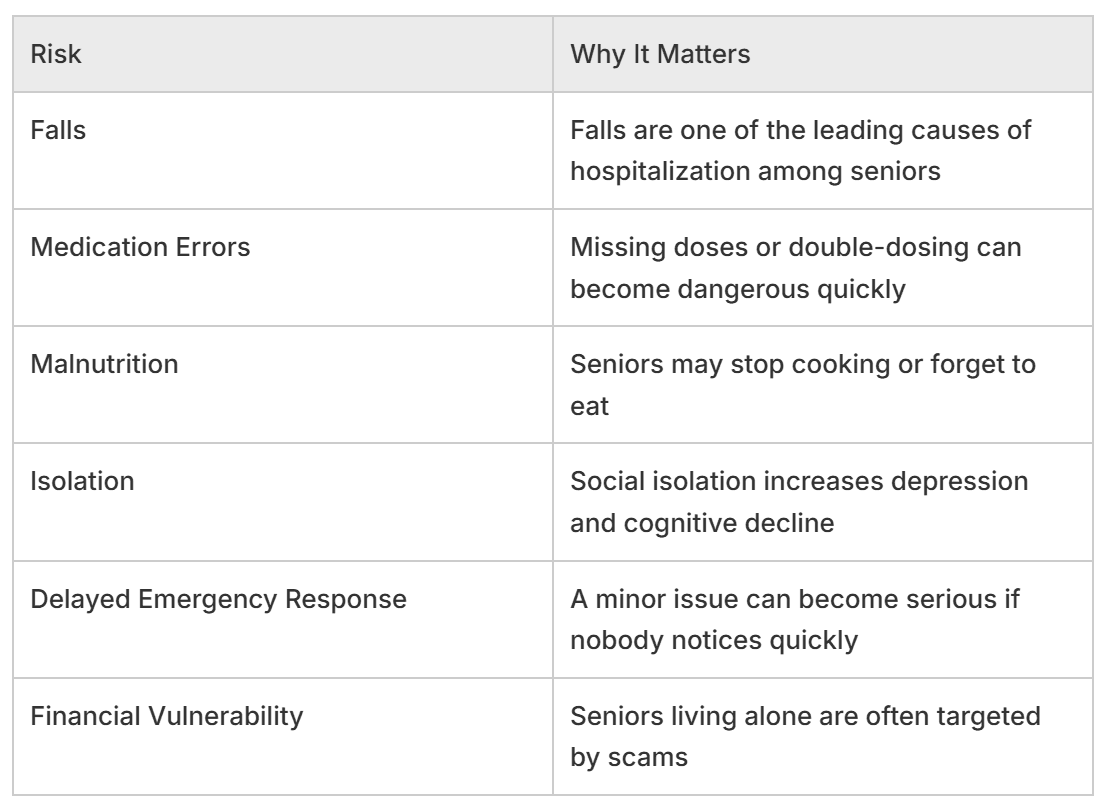
The goal is not to take independence away. The goal is to create support systems that help seniors remain independent longer.
What to Do If You’re Worried About Your Parent Living Alone
1. Start With Observation, Not Confrontation
Many adult children immediately jump into:
“You can’t live alone anymore.”
That usually creates resistance.
Instead:
Ask questions
Observe routines
Notice patterns
Focus on safety and quality of life
Examples:
“How are groceries going?”
“Do you feel steady on stairs?”
“Would it help having someone check in weekly?”
The conversation works better when seniors feel respected rather than controlled.
2. Create a Safety Baseline
Before making major decisions, assess:
Mobility
Medication management
Nutrition
Home cleanliness
Driving safety
Social engagement
Memory changes
This helps determine whether occasional support, weekly check-ins, or daily care may be appropriate.
3. Don’t Wait for a Crisis
Many families delay action until:
A fall occurs
A hospitalization happens
Wandering begins
Bills pile up
Severe confusion appears
The problem is that reactive care is usually more expensive, stressful, and disruptive.
Proactive support often helps seniors stay home longer.
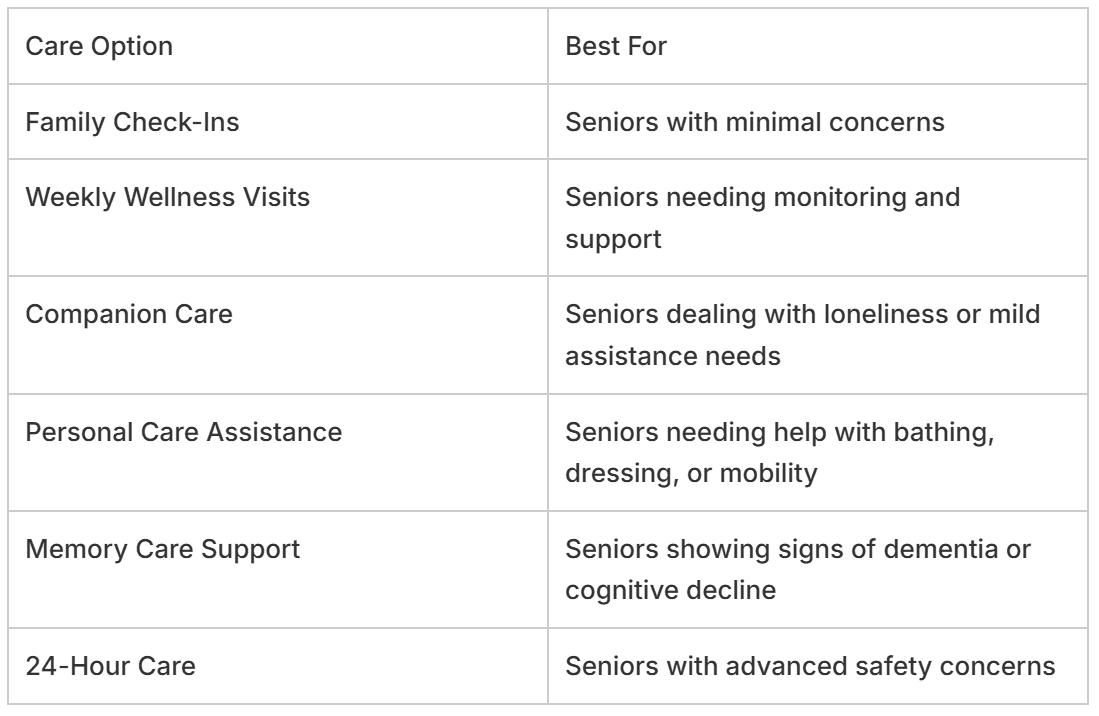
Options for Seniors Living Alone in Renton
Not every family needs full-time home care immediately.
There are multiple levels of support available.
The right solution depends on the senior’s current condition — not just age.
Why Local Support Matters in Renton
National services often feel impersonal.
Local care providers understand:
Renton neighborhoods
Local hospitals
Traffic patterns
Senior resources
Community dynamics
For example, families near The Landing may have different accessibility needs than seniors living in hillside areas of Highlands or Fairwood.
Local knowledge helps care feel more responsive and personalized.
How Caringene Helps Families in Renton
At Caringene, we focus on helping seniors remain independent safely while giving families peace of mind.
We understand that many families are not ready for full-time care. They simply want:
Regular check-ins
Reliable updates
Extra eyes on their loved one
Early identification of problems
Support navigating aging challenges
Our approach is designed around proactive aging support rather than waiting for emergencies.
How Proactive Support Can Reduce Long-Term Aging Costs
One of the biggest misconceptions is that delaying help saves money.
In reality, unmanaged aging challenges often lead to:
Emergency room visits
Hospitalizations
Rehab stays
Faster cognitive decline
Earlier assisted living placement
Early intervention may help seniors stay independent longer.
Proactive Support | Reactive Crisis Care |
Weekly wellness visits | Emergency hospitalization |
Early mobility assistance | Fall-related injuries |
Medication reminders | Medication complications |
Social engagement | Severe isolation and depression |
Home safety monitoring | Sudden assisted living transition |
Families who act earlier often experience less emotional and financial strain later.
Local Resources for Seniors in Renton
Renton Senior Activity Center
Offers programs, activities, wellness resources, and community engagement opportunities for seniors.
Valley Medical Center
Provides healthcare services, rehabilitation, and senior-focused medical support in the Renton area.
Aging and Disability Services (King County)
Helps connect seniors and caregivers with community resources and aging support programs.
Hyde Shuttle Program
Transportation support for seniors and adults with mobility limitations.
Frequently Asked Questions
How do I know if my elderly parent can no longer live alone safely?
Warning signs include falls, memory issues, poor hygiene, missed medications, confusion, weight loss, and increasing isolation. Small changes often appear before a serious incident occurs.
What is the best option for elderly parents who want to stay independent?
Many seniors benefit from gradual support such as weekly wellness visits, companion care, or in-home assistance before full-time care becomes necessary.
When should families consider home care for an aging parent?
Families should consider support when daily tasks, safety, mobility, or cognitive issues begin affecting quality of life or increasing health risks.
Supporting Independence Without Waiting for a Crisis
Most seniors do not want to lose their independence. Most adult children do not want to overstep. The best outcomes usually happen somewhere in the middle.
If you’re worried about your elderly parent living alone in Renton, it may be time to explore proactive support before an emergency forces major decisions.
At Caringene, we help families create sustainable support systems that allow aging parents to remain safer, more connected, and more independent at home.
Whether your loved one needs occasional check-ins or more involved support, the goal is simple: help them age with dignity while reducing stress for the entire family.
Small interventions today can prevent much larger problems tomorrow.
Explore More Helpful Guides on the Caringene Blog:
Worried About Elderly Parent Living Alone in Washington? Here’s What Families Need to Know
Worried About Elderly Parent Living Alone in Bellevue? Here’s What Families Need to Know
Signs Elderly Parent Is Declining in Seattle: Warning Signs Families Should Never Ignore
Signs Elderly Parent Is Declining in Redmond: Warning Signs Families Should Never Ignore
The content on this blog is intended for general informational purposes only and does not constitute medical advice, diagnosis, or treatment. Caringene is a non-medical home care provider. Do not make healthcare decisions based on the information provided here—always consult with a physician or licensed medical professional for guidance regarding medical care or treatment.