Support for Independent Older Adults in Washington


Staying independent doesn’t mean going unnoticed.
Our weekly check-ins are designed to help families stay informed and older adults stay independent at home. Get started in under 24 hours.
Your parent still says they’re doing fine.
They still live independently. They still drive, shop, and handle most things on their own. But lately, you’ve started noticing subtle changes that are difficult to ignore.
Maybe they seem more forgetful during conversations. Maybe the house looks different than it used to. Maybe you live across Seattle, Bellevue, or Tacoma and can’t physically check in as often as you’d like.
If you’re searching for support for independent older adults in Washington, you’re probably not looking for assisted living or full-time caregiving yet.
You’re looking for a way to help your parent stay independent safely while making sure someone local is checking in regularly.
That’s exactly why more families across Washington communities like Bellevue, Kirkland, and Renton are turning to proactive aging support services before a crisis happens.
Near familiar landmarks like Pike Place Market and the Seattle Waterfront, thousands of older adults are successfully aging in place. The families who do it best usually have one thing in common: they build support systems early instead of waiting for emergencies.
What Does Support for Independent Older Adults Mean?
Support for independent older adults refers to services and systems designed to help seniors continue living safely, comfortably, and confidently in their own homes.
This does not necessarily mean full-time caregiving.
In many cases, older adults simply need:
Regular wellness visits
Social interaction
Transportation assistance
Medication reminders
Additional family visibility
Help identifying subtle changes early
The goal is not to remove independence.
The goal is to help preserve independence longer while reducing the risk of emergencies, falls, isolation, and unnoticed decline.
Common Types of Support for Independent Seniors
Type of Support | Why It Matters |
|---|---|
Weekly wellness visits | Helps identify concerns early |
Family communication | Gives loved ones peace of mind |
Companionship | Reduces loneliness and isolation |
Transportation support | Helps seniors remain active |
Medication reminders | Prevents missed medications |
Home safety awareness | Helps reduce avoidable accidents |
Many older adults across Washington strongly prefer remaining in their homes instead of transitioning into assisted living communities. With proactive support, many can safely continue doing so.
Why More Washington Families Are Concerned About Aging Parents Living Alone
Families throughout Washington are balancing increasingly busy lives.
Adult children often juggle:
Careers
Parenting responsibilities
Long commutes
Business travel
Multiple family obligations
Meanwhile, aging parents continue living independently nearby — or sometimes entirely alone.
This creates constant low-level stress for many families:
“What if they fall and nobody notices?”
“How do I know they’re really okay?”
“What if something changes slowly over time?”
“Am I waiting too long to step in?”
Phone calls alone rarely tell the full story.
Many older adults minimize concerns because they do not want to burden family members or lose their independence.
That’s why consistent in-person visibility matters.
Early Signs an Older Adult May Need Additional Support
Most decline happens gradually.
Families often miss the early warning signs because changes happen slowly over time.
Physical Warning Signs
Sign | What It May Indicate |
|---|---|
Increased falls or instability | Mobility or balance changes |
Weight loss | Difficulty cooking or maintaining routines |
Missed medications | Trouble managing schedules |
Reduced home cleanliness | Daily tasks becoming harder |
Cognitive & Emotional Changes
Sign | What It May Indicate |
|---|---|
Forgetfulness | Possible cognitive decline |
Isolation | Withdrawal from social activities |
Anxiety or confusion | Difficulty managing routines |
Missed appointments | Organizational challenges increasing |
These issues often appear long before families realize structured support may be needed.
Why Waiting Until a Crisis Happens Usually Makes Things Worse
One of the biggest mistakes families make is waiting until a major emergency happens before getting support involved.
Unfortunately, a single hospitalization or fall can significantly accelerate decline in older adults.
What Often Happens Without Early Support
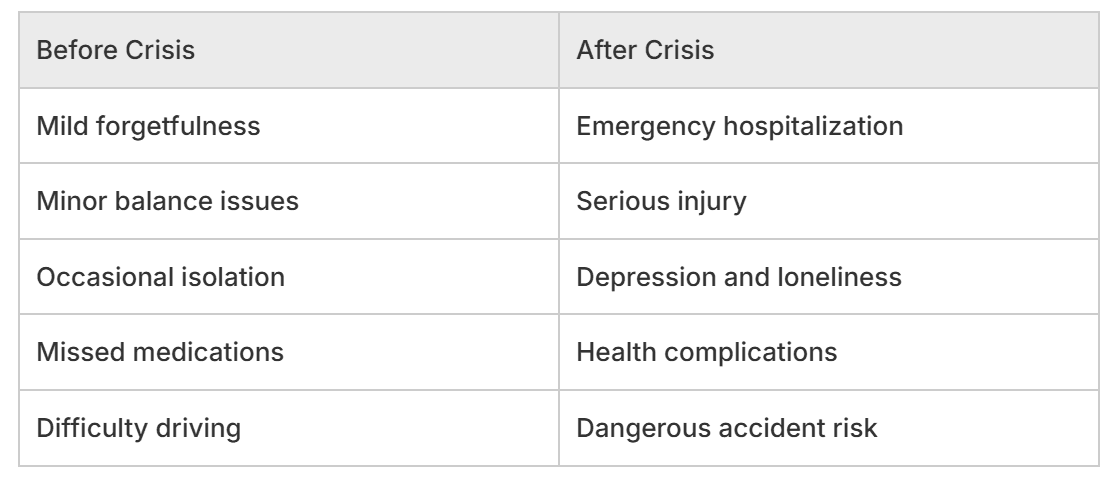
Before Crisis | After Crisis |
|---|---|
Mild forgetfulness | Emergency hospitalization |
Minor balance issues | Serious injury |
Occasional isolation | Depression and loneliness |
Missed medications | Health complications |
Difficulty driving | Dangerous accident risk |
Proactive support helps identify smaller concerns before they become much larger problems.
Why Aging in Place Matters So Much to Older Adults
Most older adults strongly prefer remaining in their own homes.
Home represents:
Independence
Familiar routines
Emotional comfort
Stability
Community
Personal identity
For many seniors throughout Washington, staying at home helps preserve dignity and quality of life.
That’s why support systems focused on aging in place are becoming increasingly important.
The Large Gap Between Independent Living and Full-Time Care
Most families searching this topic are not looking for 24-hour caregiving or assisted living.
They’re looking for reassurance and visibility.
There’s a major gap between:
Living fully independently
andRequiring full-time care
That middle ground is where proactive wellness support becomes extremely valuable.
What Families Actually Want
Most adult children simply want:
Someone local checking in consistently
Visibility into how their parent is doing
Early awareness of concerns
Peace of mind
Help preserving independence longer
That’s very different from traditional home care.
How Caringene Helps Independent Older Adults Across Washington
Caringene was built specifically for families with aging parents who still live independently.
Instead of waiting until a crisis forces difficult decisions, Caringene provides recurring in-person wellness visits designed to help families stay informed while helping older adults remain independent longer.
The focus is not institutional care.
The focus is proactive support, visibility, and early awareness.
What Caringene Wellness Visits Include
Caringene Service | Purpose |
|---|---|
Recurring in-person visits | Ensure seniors are doing well |
Conversation & companionship | Reduce loneliness |
Observation of changes | Catch concerns early |
Family updates | Keep loved ones informed |
Home safety awareness | Identify potential risks |
Ongoing relationship-building | Build trust and consistency |
Many Washington families simply want reassurance that:
Someone trustworthy has checked in
Their parent is safe
Small problems are not going unnoticed
That’s exactly the gap Caringene helps fill.
Why Preventative Support Can Lower Long-Term Aging Costs
Many families assume support automatically means expensive full-time care.
But proactive support is often far less expensive than reacting to emergencies later.
Comparing Long-Term Outcomes
Proactive Support | Crisis-Driven Care |
|---|---|
Lower monthly costs | Expensive hospital stays |
Early issue detection | Emergency interventions |
Helps preserve independence | Faster decline |
Reduced family stress | Sudden difficult decisions |
Delays higher-level care | Accelerated assisted living needs |
Helping older adults remain stable and independent longer can significantly reduce aging-related costs over time.
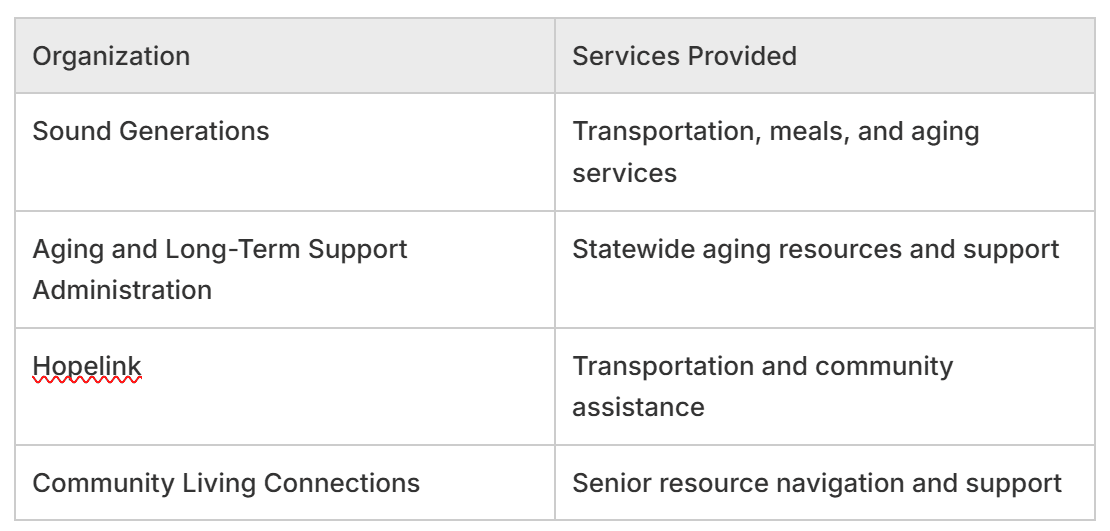
Local Washington Resources for Older Adults
Washington offers several excellent senior support resources for older adults and their families.
Local Senior Resources
FAQs About Support for Independent Older Adults
What support helps older adults stay independent longer?
Regular wellness visits, companionship, transportation assistance, medication reminders, and family visibility all help seniors remain independent safely.
When should families start getting support for aging parents?
The best time is usually when families first notice subtle changes — before a major fall, hospitalization, or emergency occurs.
Is support for independent older adults the same as home care?
Not necessarily. Many older adults only need recurring wellness visits and proactive support long before they require full-time caregiving.
Helping Aging Parents Stay Independent in Washington
Most older adults do not want to lose their independence.
And most families do not want to wait until something serious happens before stepping in.
That’s why proactive support matters.
Across Washington communities like Bellevue, Kirkland, and Renton, more families are realizing that regular wellness visits and consistent visibility can help aging parents remain independent safely for much longer.
Caringene helps families stay connected to aging loved ones through recurring in-person wellness visits designed to provide peace of mind, proactive support, and early awareness before small concerns become major emergencies.
If you’re worried about a parent living alone in Washington, now is usually the best time to put support systems in place — before a crisis forces difficult decisions later.
Explore More Helpful Guides on the Caringene Blog:
The content on this blog is intended for general informational purposes only and does not constitute medical advice, diagnosis, or treatment. Caringene is a non-medical home care provider. Do not make healthcare decisions based on the information provided here—always consult with a physician or licensed medical professional for guidance regarding medical care or treatment.