Worried About Elderly Parent Living Alone in Seattle? Here’s What Families Need to Know


Staying independent doesn’t mean going unnoticed.
Our weekly check-ins are designed to help families stay informed and older adults stay independent at home. Get started in under 24 hours.
If you’re worried about an elderly parent living alone in Seattle, you are not overreacting. Most families notice subtle changes long before a true emergency happens — missed medications, growing isolation, forgetfulness, falls, unopened mail, or confusion during phone calls. The hard part is knowing whether these are normal signs of aging or indicators that your parent may no longer be fully safe living alone.
In Seattle neighborhoods like Queen Anne, Ballard, and Capitol Hill, many older adults continue aging independently while family members balance careers, parenting, and distance. Even near familiar Seattle landmarks like Pike Place Market and Green Lake Park, senior isolation and unnoticed decline are becoming increasingly common.
The good news is that families now have better options than simply waiting for a crisis or jumping straight into assisted living. With proactive support and regular wellness visibility, many seniors can remain independent safely for far longer.
Why Families Become Worried About Elderly Parents Living Alone
Most seniors deeply value independence. They want to stay in their own homes, maintain routines, and avoid feeling like a burden.
But aging alone creates risks that often develop slowly and quietly.
Common concerns families begin noticing include:
Missed medications
Increased forgetfulness
Trouble maintaining the home
Weight loss or poor eating habits
Growing isolation
Balance problems or falls
Missed doctor appointments
Difficulty managing bills
Changes in mood or personality
Seattle’s weather, hills, and long darker seasons can make these issues worse, especially for seniors already struggling with mobility or loneliness.
The Emotional Side of Watching a Parent Age Alone
Many adult children feel trapped between respecting independence and worrying constantly.
You may find yourself thinking:
“Am I overreacting?”
“What if something happens and nobody knows?”
“Should we already be considering assisted living?”
“How do I help without taking control away?”
These concerns are incredibly common.
The important thing to realize is this: support does not have to mean removing independence. In many cases, earlier visibility and proactive support can actually help seniors remain independent much longer.
Signs an Elderly Parent May No Longer Be Safe Living Alone
Some warning signs are obvious. Others are easy to dismiss until they suddenly escalate.
Physical Warning Signs
Falls or Balance Issues
Falls are one of the biggest risks for aging adults living alone.
Look for:
Bruising
Difficulty standing
Walking more slowly
Holding onto furniture
Hesitation using stairs
Even one fall can dramatically increase future hospitalization risk.
Poor Nutrition or Weight Loss
An empty fridge, spoiled groceries, or noticeable weight loss may indicate:
Forgetfulness
Depression
Difficulty cooking
Mobility limitations
Lack of appetite
Changes in Hygiene or Home Cleanliness
A once-clean home becoming cluttered or neglected may signal:
Cognitive decline
Fatigue
Depression
Physical limitations
Cognitive and Behavioral Warning Signs
Memory-related issues are one of the biggest reasons families become worried about elderly parents living alone.
Signs to Watch Closely
Repeating stories frequently
Missing appointments
Confusion about dates or times
Forgetting medications
Leaving appliances on
Difficulty following conversations
Unpaid bills piling up
Getting lost while driving
When Forgetfulness Becomes Dangerous
Behavior | Typical Aging | Serious Concern |
|---|---|---|
Forgetting names | Occasionally | Frequently |
Misplacing items | Sometimes | Constantly |
Paying bills late | Rarely | Repeated missed payments |
Driving hesitantly | Mildly cautious | Getting lost |
Forgetting appointments | Occasionally | Frequently confused |
The Hidden Health Risks of Senior Isolation
One of the most underestimated dangers for seniors living alone is isolation.
Research consistently links chronic loneliness among older adults to:
Faster cognitive decline
Depression
Higher hospitalization rates
Increased dementia risk
Heart disease
Poorer overall health outcomes
In rapidly changing Seattle neighborhoods, many seniors become disconnected from longtime communities and support systems.
Even seniors living near busy places like Downtown Seattle or the Space Needle may go days without meaningful social interaction.
Options for Families in Seattle
Many families assume their only choices are:
Do nothing
Move a parent into assisted living
That is not true.
There is a growing middle ground between complete independence and full-time caregiving.
Option 1: Family Check-Ins
This works best when:
Family members live nearby
Risks are still relatively mild
Seniors remain highly independent
However, family-only monitoring often creates:
Constant anxiety
Burnout
Missed warning signs
Uneven communication among siblings
Option 2: Traditional Home Care
Home care services can assist with:
Bathing
Meal preparation
Transportation
Medication reminders
Daily activities
But many families are not ready for full caregiving support yet.
In many situations, the concern is not:
“We need hands-on care immediately.”
It is:
“We think something may be changing and want better visibility before a crisis happens.”
That gap is where many traditional senior care models fall short.
Option 3: Assisted Living
Assisted living may eventually become necessary when:
Falls become frequent
Dementia worsens
Medication management fails
Daily functioning declines significantly
However, Seattle assisted living costs can easily range from $6,000–$10,000+ monthly.
For many families, moving too early can feel emotionally and financially overwhelming.
Senior Care Option | Average Seattle Monthly Cost | Independence Level |
Home Care | $3,000–$7,000 | Moderate to High |
Assisted Living | $6,000–$10,000+ | Moderate |
Nursing Home | $12,000+ | Low |
Proactive Wellness Check-Ins | Lower long-term cost potential | High |
How Caringene Helps Seattle Families Stay Ahead of Aging Challenges
Most families do not begin by searching for full-time caregiving or assisted living.
They begin with a feeling:
“Something seems different lately.”
“Dad sounds more forgetful.”
“Mom seems isolated.”
“I wish someone could check in regularly.”
That is exactly where Caringene fits in.
Caringene is a proactive wellness check-in service designed for aging adults living independently. We help Seattle families stay informed through regular in-person visits, thoughtful updates, and ongoing visibility into how their loved one is actually doing day to day.
Unlike traditional home care services that focus primarily on hands-on assistance, Caringene focuses on noticing subtle changes early — before they become emergencies.
That may include:
Increased forgetfulness
Mood or behavior changes
Isolation
Mobility decline
Medication inconsistencies
Confusion around routines
Changes in eating habits
Changes in home condition
These small shifts are often the earliest indicators that an aging parent may need more support.
Why Families in Seattle Use Caringene
Many families use Caringene when:
They live outside Seattle
Their parent still wants independence
They want visibility without overreacting
They are not ready for assisted living conversations
They want reassurance someone is checking in consistently
They want to reduce the risk of emergencies later
For seniors living in Ballard, Queen Anne, Capitol Hill, and surrounding Seattle communities, Caringene provides a middle layer of support between complete independence and full-time caregiving.
The Real Goal: Helping Seniors Stay Independent Longer
Most aging adults do not want to lose independence.
Most families do not want to take it away prematurely.
Caringene helps bridge that gap.
By maintaining regular connection and noticing concerns early, families can make better-informed decisions sooner — often helping loved ones remain safely independent much longer.
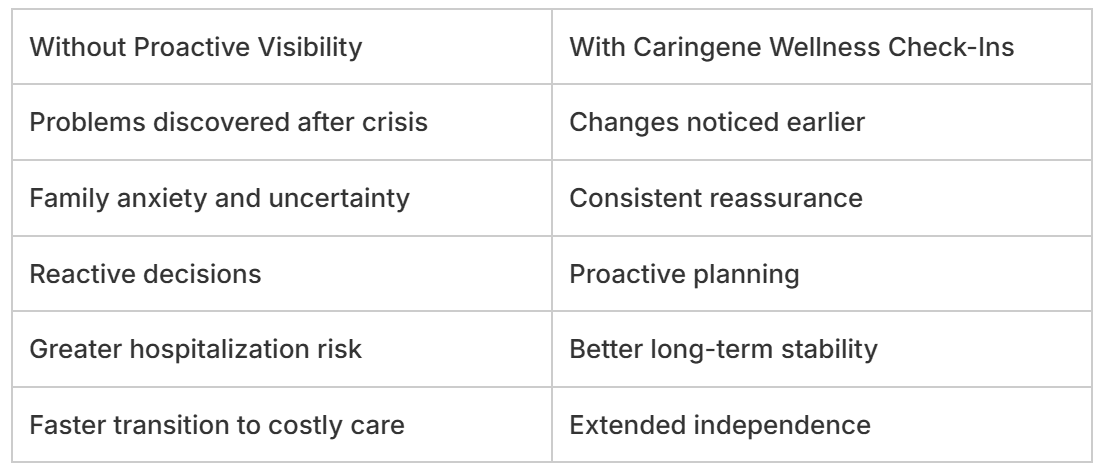
Why Early Intervention Matters Financially
One of the biggest misconceptions families have is believing costs only rise once serious care begins.
In reality, crises are what create the biggest financial damage.
A single fall can trigger:
Emergency hospitalization
Rehabilitation
Reduced mobility
Loss of independence
Assisted living placement
Earlier visibility and preventive support can help families avoid or delay many of these outcomes.
That is why proactive aging support is often significantly less expensive long term than waiting for emergencies to force decisions.
Local Seattle Resources for Seniors and Families
Families worried about elderly parents living alone in Seattle should also explore these local resources.
Aging and Disability Services (ADS)
Seattle’s Area Agency on Aging providing caregiver support, case management, and aging resources.
Sound Generations
Offers transportation, meals, and wellness programs for seniors across King County.
Seattle Senior Centers
Community programs helping older adults stay socially connected and active.
Volunteer Transportation Services
Helpful for seniors who are no longer comfortable driving independently.
Frequently Asked Questions
How do I know if my elderly parent should no longer live alone?
Warning signs include falls, memory decline, isolation, missed medications, poor hygiene, confusion, and difficulty managing daily tasks safely.
What is the biggest danger for seniors living alone?
Falls, medication mistakes, and social isolation are among the most serious risks. Cognitive decline can also worsen unnoticed over time.
Is assisted living the only option?
No. Many seniors can safely remain independent longer with proactive wellness check-ins, family visibility, and early support systems.
The Best Time to Act Is Before a Crisis
Most families wait too long because they fear overstepping or taking away independence.
Unfortunately, waiting often means fewer options later.
If you are worried about an elderly parent living alone in Seattle, trust your instincts. Small changes today can become major emergencies tomorrow if nobody is paying close attention.
The goal is not to take independence away.
The goal is to create enough visibility and support so your loved one can continue aging safely, confidently, and independently for as long as possible.
Caringene helps Seattle families stay informed before emergencies happen through proactive wellness check-ins, thoughtful updates, and ongoing visibility into day-to-day well-being.
For families across Seattle neighborhoods like Ballard, Queen Anne, and Capitol Hill, Caringene provides peace of mind while helping aging parents maintain dignity, independence, and quality of life longer.
Explore More Helpful Guides on the Caringene Blog:
Worried About Elderly Parent Living Alone in Redmond? Here’s What Families Need to Know
Worried About Elderly Parent Living Alone in Bellevue? Here’s What Families Need to Know
Signs Elderly Parent Is Declining in Seattle: Warning Signs Families Should Never Ignore
Signs Elderly Parent Is Declining in Redmond: Warning Signs Families Should Never Ignore
The content on this blog is intended for general informational purposes only and does not constitute medical advice, diagnosis, or treatment. Caringene is a non-medical home care provider. Do not make healthcare decisions based on the information provided here—always consult with a physician or licensed medical professional for guidance regarding medical care or treatment.